Case Studies > UK Certification
DesignBuilder Used to Achieve Part-O TM59 Compliance in an Apartment Block Subject to Significant External Noise
| About | Part O TM59 overheating study for a new 4-storey apartment block for a national housebuilder. | 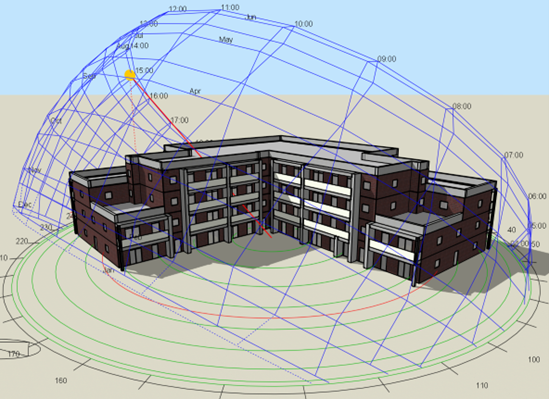 |
| By | Environmental Economics Limited | |
| Location | Newbury, Berkshire | |
| Category | TM59, Part O | |
| Highlights |
|
Abstract
The proposed development near the Newbury Racecourse site will include the construction of 7 accommodation blocks up to 4 storeys high. This apartment block comprises of 50 self-contained 1 and 2 bedroom apartments. The thermal comfort of these spaces is assessed in DesignBuilder using the TM59 methodology to meet Part O Compliance. The development is situated south of the railway line serving the Newbury Racecourse station. As a result, some of the habitable spaces, including bedrooms, are adversely affected by noise at night-time and cannot rely on natural ventilation. Therefore, the overheating mitigation strategy includes mechanical extract ventilation.
Introduction
The aim of the project is to accurately model the thermal conditions within the apartment block and determine whether the habitable and common spaces comply with Part O. TM59 provides the relevant passing criteria:
- For living rooms, kitchens and bedrooms: the number of hours during which ΔT is greater than or equal to one degree (K) during the period May to September inclusive shall not be more than 3 per cent of occupied hours.
- For bedrooms only: to guarantee comfort during the sleeping hours, the operative temperature in the bedroom from 10 pm to 7 am shall not exceed 26 °C or more than 1% of annual hours.
Whilst there is no mandatory target to meet, if, for a communal corridor, the operative temperature exceeds 28 °C for more than 3% of the total annual hours, this should be identified as a significant risk.
Allowing natural ventilation through openable glazing is highly effective in helping meet the passing criteria. However, where there are limitations due to excess noise, pollution or security risk, this may no longer be possible. In the case of the Newbury Racecourse development, the associated site acoustic report provides noise limiting conditions set out in the planning phase of 30 dB LAeq,8hr and 45 dB LAmax (for bedrooms at night-time between 11pm and 7am). The graphic provided in the acoustic report suggests that bedrooms on the highlighted facades of each apartment block will not meet limiting conditions if windows are to remain partially open at night.
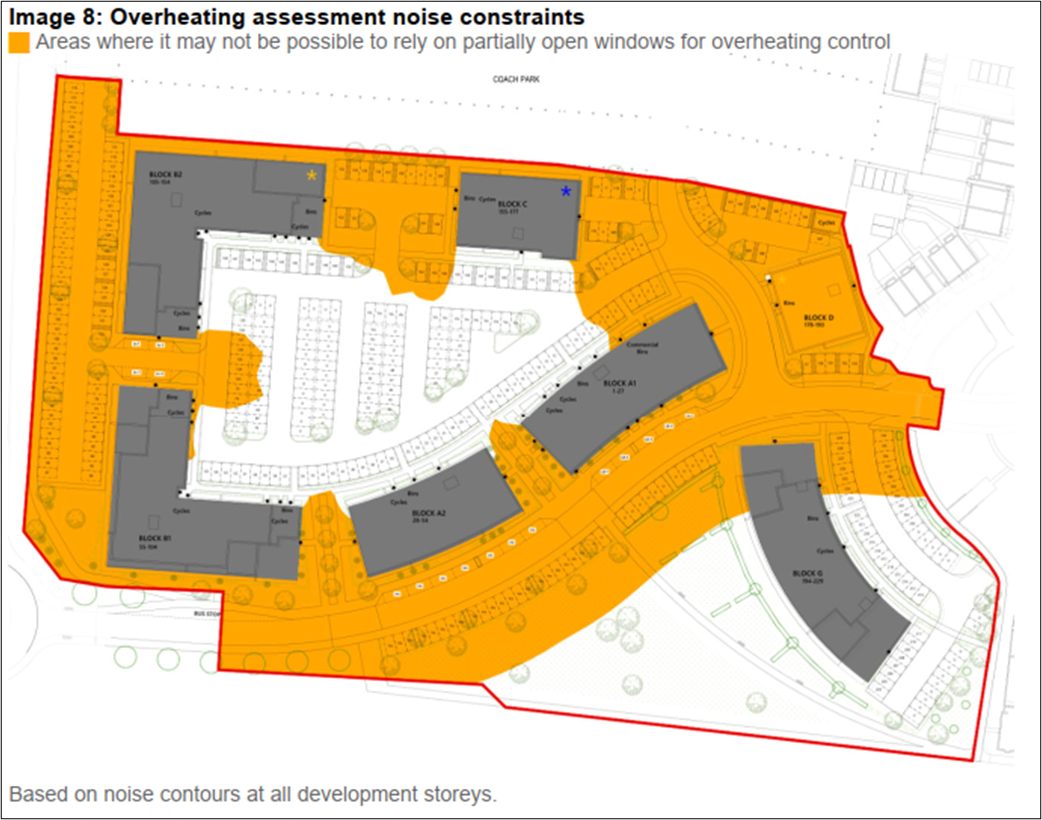
Figure 2. Graphic of noise-affected apartment blocks from the acoustic report
DesignBuilder enables natural ventilation calculations and determines the impact of the restricted openings. It provides thermal outputs for zones and determines which apartments fail the TM59 criteria. Where necessary, the software will model the use of Mechanical Extract Ventilation to help mitigate overheating.
Methodology
DesignBuilder was used to determine Part O compliance and provide guidance on overheating mitigation strategy. The architectural drawings of the apartment block were reviewed, extracting key information such as dimensions, fabric constructions, window fenestration and zone designations. This stage was also important in selecting apartments for sampling, so that results can be applied to spaces with a similar layout and reduce overall simulation time.
While one-bedroom flats were similar in layout, some two-bedroom flats had an ensuite and therefore had to be sampled separately. The difference in ventilation rates between the ensuite and non-ensuite flats, due to additional wet room extract ventilation for Part F compliance, would mean they would perform slightly differently. Sampling the flats also accounted for the exposed facades, so apartments were grouped based on similar expected heat gains through the building fabric. The significant differences in layout between the ground and first floors, and the second and third floors, resulted in different numbers of sampled apartments per floor.
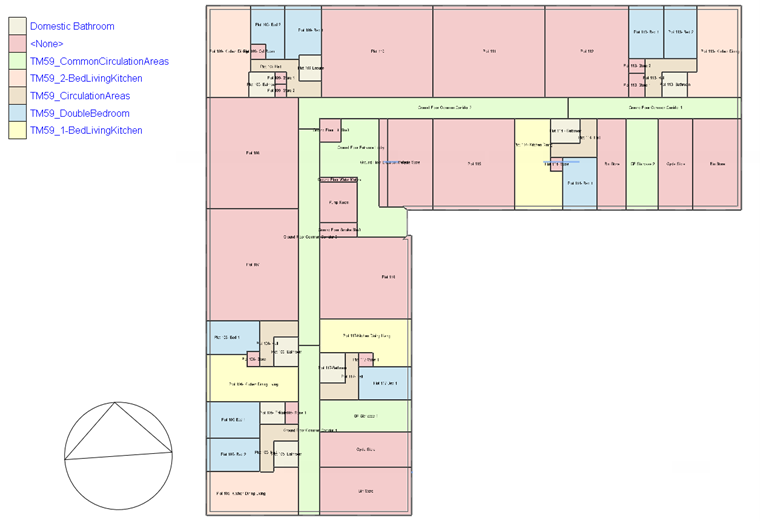
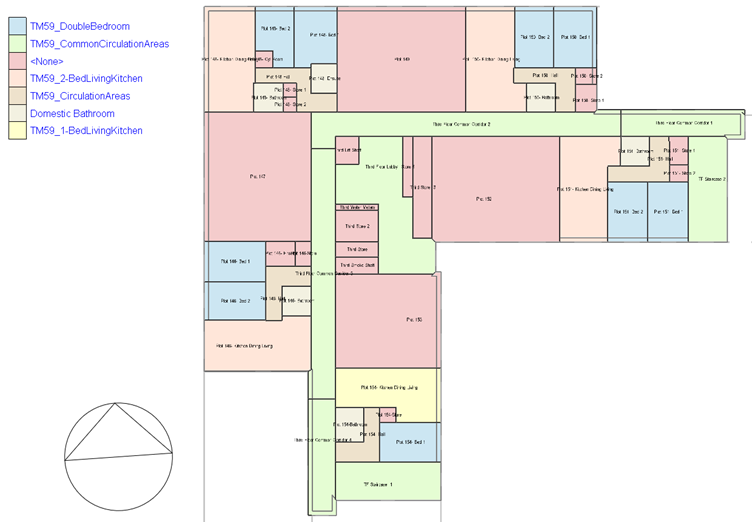
Figure 3. Ground floor and third floor layout with zone activity
To best reflect external conditions, the model used localised weather conditions, applying the Swindon DSY1 2020 High Emissions, 50th Percentile weather file. Internal gains for lighting and equipment, and occupancy profiles for zones, followed the procedure set out in the TM59 methodology.
The main types of openings available to apartments were side-hung double French doors and single doors with large, glazed areas. However, selected end apartments were also provided with additional top-hung windows in the Kitchen/Living spaces. All openings on facades with acoustic issues were closed at night to meet internal noise requirements for bedrooms. In addition, all ground-floor openings (regardless of whether they are on a noise-affected façade) were modelled shut at night due to their easy accessibility and the resulting security risk to occupants. This did not apply to bedroom doors above the ground floor with external access only via private balconies.

Table 1. Glazing performance values
Results
Based on the sampling, most of the plots passed the TM59 assessment. The building orientation is 4 degrees clockwise from North. Due to the L shape of the building, some areas would be sheltered from direct sunlight. The protruding shape of the balconies and vertical columns separating them would help reduce fabric heat gain and significantly improve the chances of meeting thermal comfort criteria. Those bedrooms above the ground floor and unaffected by acoustic issues could effectively remove heat through window openings at night. All apartments with exposed facades that were not affected by noise passed the TM59 assessment. All common corridors and common circulation areas (such as staircases and lobbies) met the recommended passing criteria for hours of exceedance of operative temperature above 28°C.
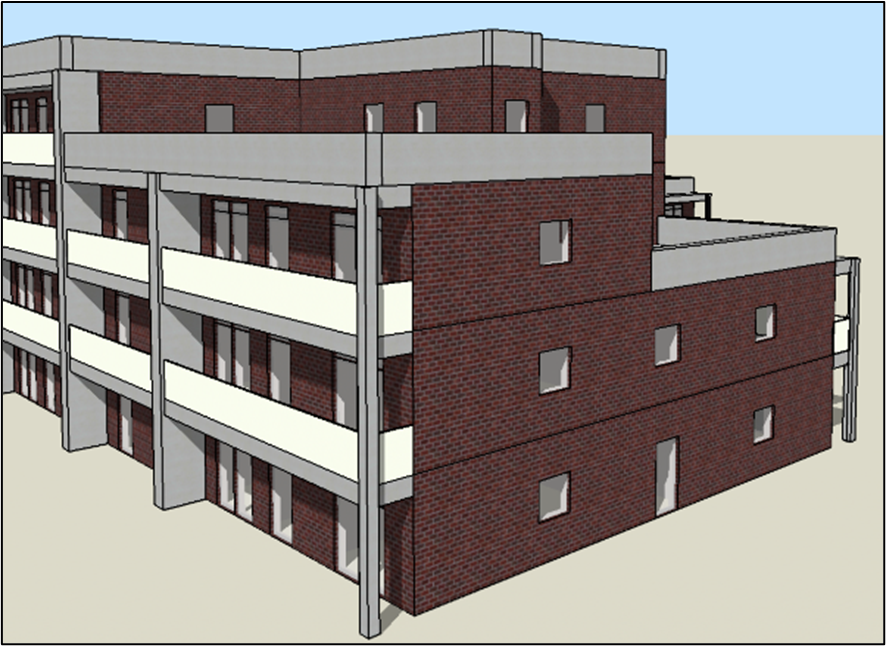
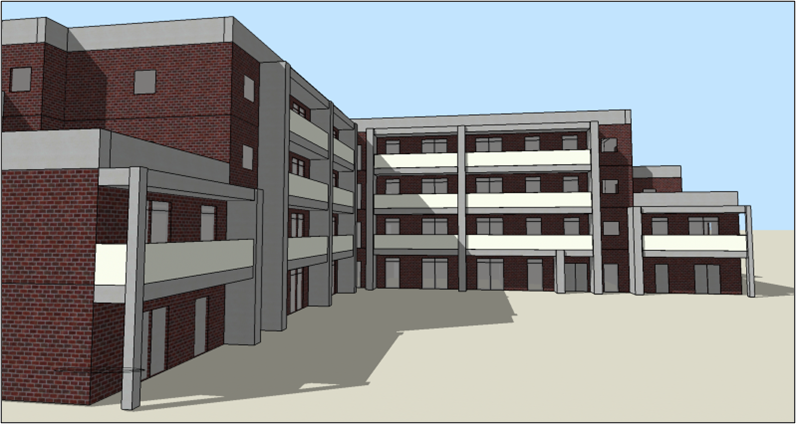
View of model from the South and South-West directions
Apartments that failed were due to either one or both (where applicable) of their bedrooms exceeding an operative temperature of 26°C for more than 1% of annual hours (TM59 Criterion B). These apartments were generally those with exposed facades on the South and West, as they were exposed to higher levels of solar radiation. Additionally, the inability to open windows at night due to external acoustic issues made it harder to meet the criteria. Most apartments sampled on other noise-affected facades not facing South and/or West passed with windows modelled as closed at night.
The mitigation measure explored involved providing mechanical extract ventilation capable of extracting 50 litres of air per second from the failing bedrooms. As all the Kitchen/Dining zones passed Criterion A, additional mitigation was not required. However, the additional air flow in the bedrooms indirectly improved thermal comfort in those zones. Below is a summary of the unmitigated and mitigated TM59 Criterion A and B results for failing apartments.
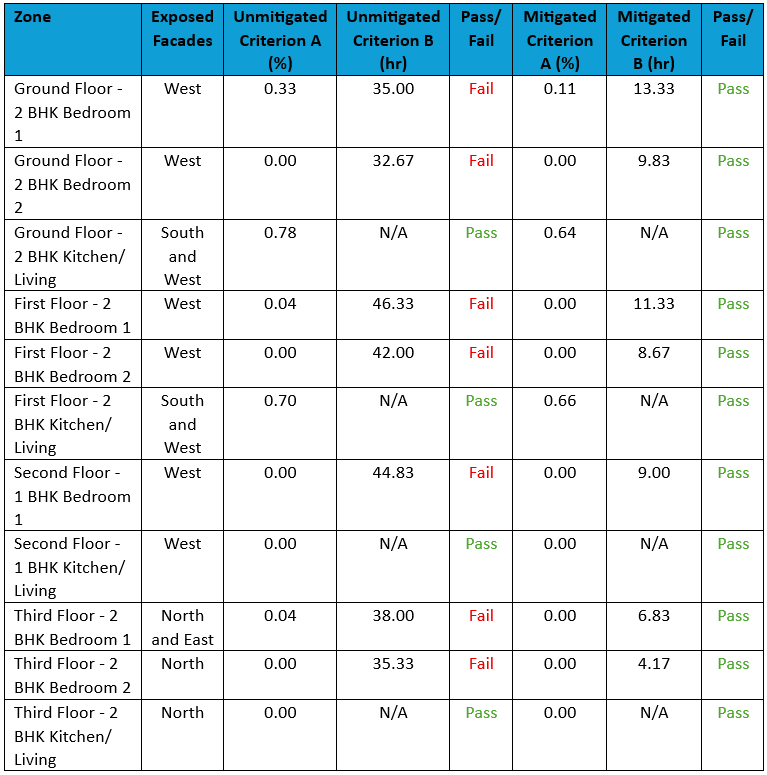
Table 2. TM59 results for select apartments with and without mitigation
Conclusions
The modelling of this apartment block has shown that DesignBuilder can provide thermal comfort analysis for large non-uniform buildings with ease. The software provided TM59 Criteria outputs for sample apartments and common areas, highlighting those that didn’t meet the relevant passing criteria. The failing apartments had common characteristics: they were on the exposed side of the building, with facades affected by noise, and, in most cases, subject to greater solar radiation from the South and West.
In this project, the appropriate approach was to model the openings on noise-affected facades as closed at night. This was due to the associated acoustic report suggesting partially open windows would not meet the required indoor noise criteria for bedrooms at night-time. However, using DesignBuilder, it would be possible to model partially open windows through the use of vents, if the noise report suggested otherwise, combined with the appropriate glazing and fenestration changes.
If required, the extract rate could be optimised by applying a range of increasing extract rates, depending on the extract devices available to the client and what is deemed an acceptable installation for the type of building. This would mean that failing apartments could meet the TM59 Criteria B through a lower rate than the applied extract of 50 l/s. Note that the Mitigated Criterion B (hr) values are far below the 32.00 hr threshold.
The project has demonstrated the importance of addressing overheating compliance at an early stage in the design process. This helps ensure that appropriate mitigation measures are incorporated where necessary to provide safe and comfortable homes for occupants, while avoiding unnecessary measures that could increase energy use.
 |
About the authorRehan Rizwan - TM59 overheating consultant
|