
Case Studies > General Simulation
Integrated HVAC Design and Off-Grid Energy System
| About | Retrofit design of the Bundanon Art Gallery HVAC system to lower annual energy use and incorporate a renewable system for off-grid operation. | 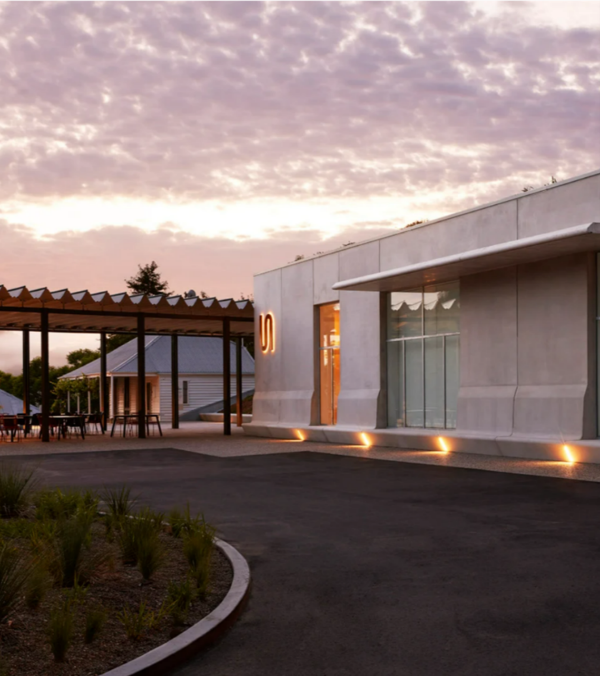 |
| By | Akarshna A K, CEPT University, Ahmedabad, India. | |
| Location | Illaroo NSW 2540, Australia | |
| Category | HVAC optimization, Renewable Energy, Existing Building, Retrofit. | |
| Highlights |
|
Introduction
The Bundanon Art Museum & Bridge complex includes an art gallery, collection store, a 32-room boutique hotel, and a café, all located within a 1100-hectare property along the Shoalhaven River. The art gallery is built mostly below grade with only its façade - northwest facing of about 40sq.m fenestration area with a U-value of 6 W/m2K, SHGC of 0.7 and a glass double door - exposed to the environment, and spans approximately 1330 m², of which 80% is conditioned.
The project focused on redesigning the HVAC system to maintain the tight environmental control year-round required to preserve the artwork in the gallery spaces and storage areas, while reducing energy use, and incurring no more than 2% unmet hours.
The optimised system design reduced the annual energy consumption by 54% compared to the existing system. DesignBuilder was used to model the hybrid VRF plus VAV terminal unit fed by a water-cooled chiller and GSHP system to meet the design requirements and improve energy efficiency.
The local electric grid supply is unreliable, with frequent interruptions due to its location at the end of the transmission line. A 303 kW fixed-tilt solar PV array (30° tilt, 352° azimuth) was modelled using OpenSolar. Multiple battery storage scenarios were tested to assess autonomy, cost, and grid independence.
A ground-source heat pump system is coupled with a Variable Air Volume (VAV) air distribution system, and complete humidity control serves as the base case. The thermal zones included the display area, conditioned storage, office, and foyer, each with distinct heating, cooling, and humidity requirements (as seen in Figure 1).
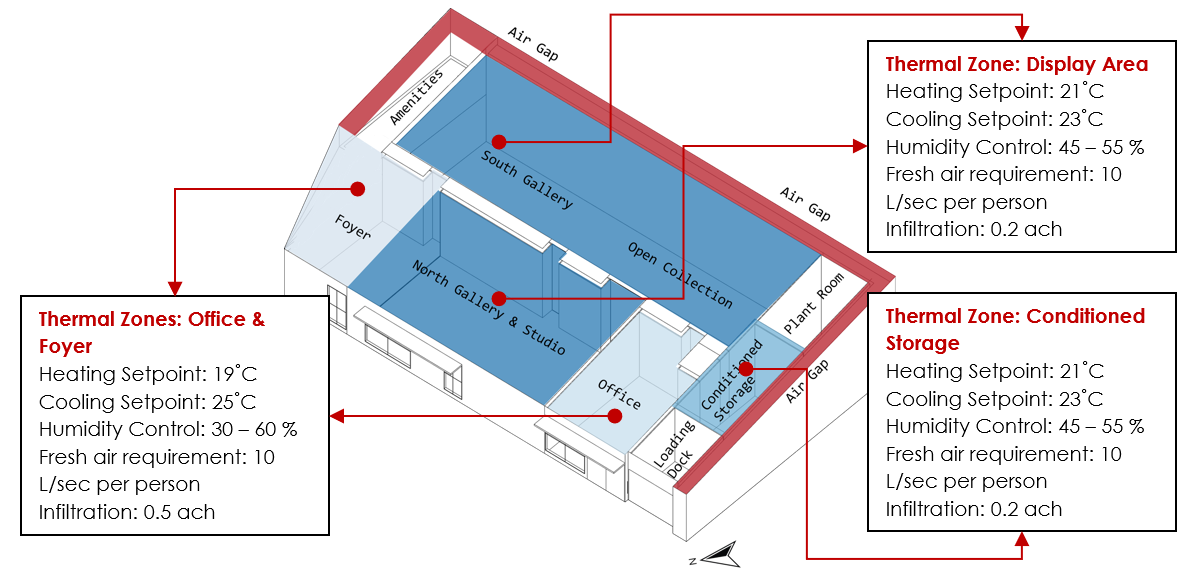
Figure 1: Gallery Zone level inputs
Base Case Energy Modelling
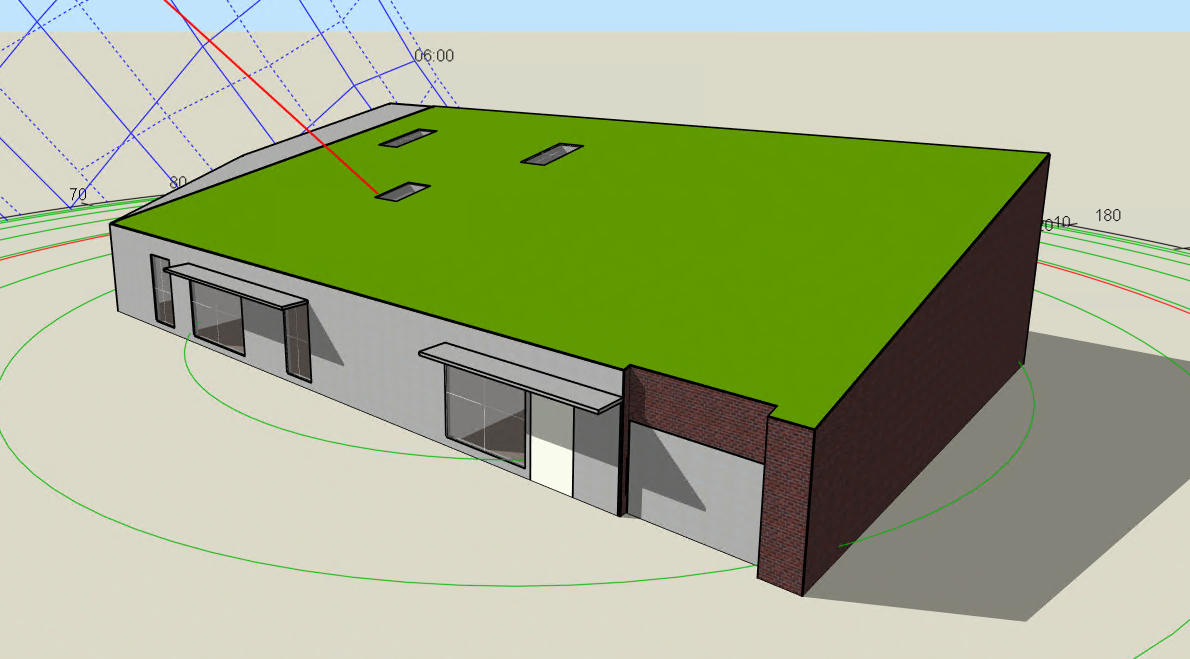
Figure 2: Energy performance model
To identify the key drivers of energy demand and optimize system performance, a detailed building performance model of the base case art gallery was developed in DesignBuilder (Figure 2). The base case model was developed to represent the existing building and its HVAC system as accurately as possible, consistent with available building information and established literature, and was used as the reference case for subsequent performance comparisons.
Comprehensive heating and cooling load analyses were conducted across all thermal zones through annual simulations. The HVAC system was modelled using Detailed HVAC components and configured to replicate the existing system of the art gallery.
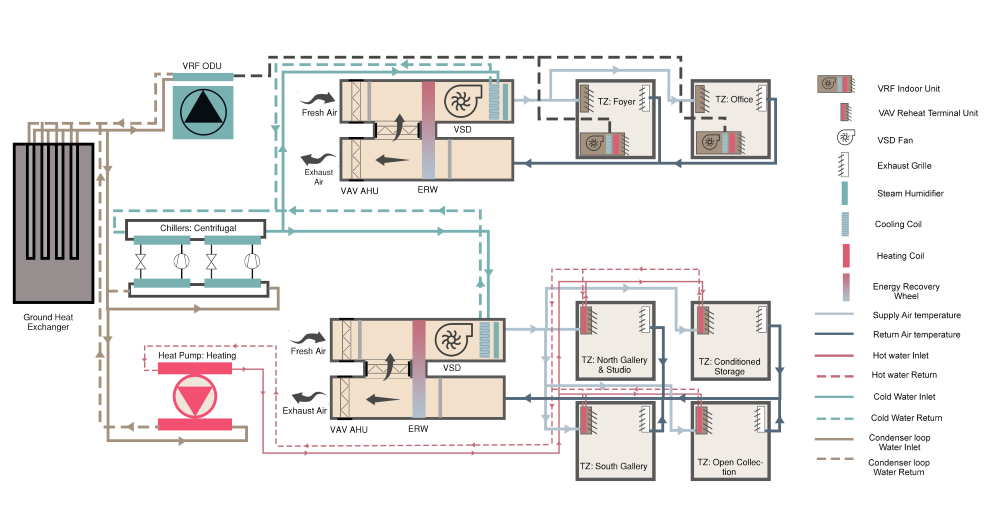
Figure 3. Base Case | GSHP with VAV Air Distribution System
Separate cooling-only and heating-only water-to-water ground-source heat pumps were sized and modelled based on capacities determined through DesignBuilder’s HVAC sizing calculations. A ground heat exchanger was modelled, with borehole and pipe geometry adjusted to reflect the existing configuration of 27 boreholes, each between 100 and 300m deep. The Air Handling Unit (AHU) was modelled with a chilled-water cooling coil for cooling and dehumidification, a hot-water heating coil, and a steam humidifier. The supply air properties are controlled using three setpoint managers:
- Dehumidification coil operation is based on the maximum allowed humidity ratio for the zone requiring the driest air in that group.
- Humidification was controlled as for dehumidification, but based on the zone requiring the most humid air.
- Temperature control uses the “warmest” method with a temperature band of 11 to 18°C.
An energy recovery ventilation (ERV) system was also incorporated to enhance efficiency. Each thermal zone was served by VAV reheat boxes with hot-water coils, maintaining supply air temperatures of 35°C (heating) and 14°C (cooling), and supply air humidity ratios of 0.004 (heating) and 0.005 (cooling).
Occupancy density, equipment power density, and lighting power density were assigned to the zones based on their actual operational schedules.
Base Case Energy Performance Analysis
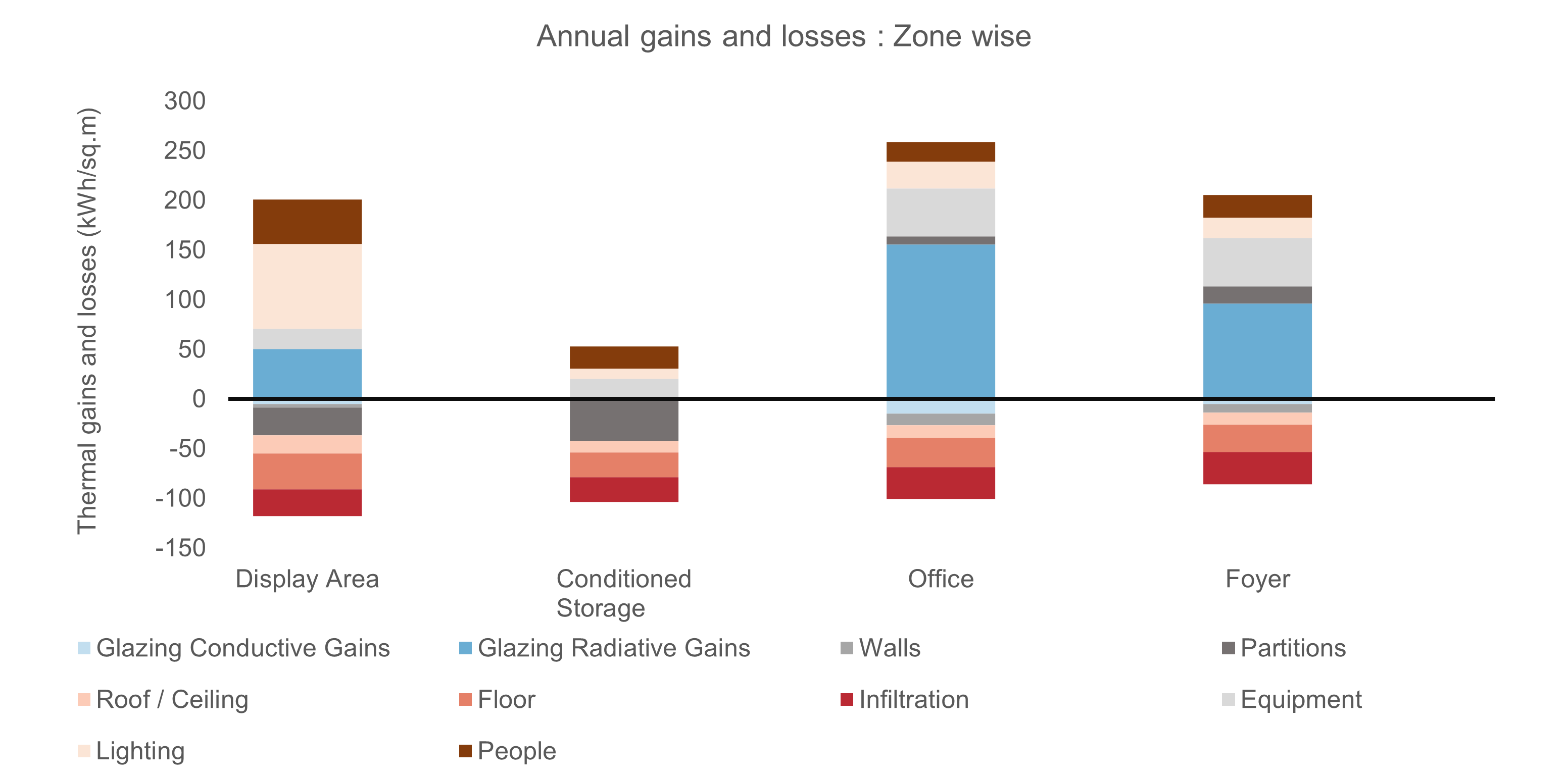
Figure 4: Base Case: Zone – Thermal Gains and Loses
Internal gains varied significantly across zones with distinct patterns driven by their function and envelope characteristics. The Office zone has the highest net thermal gains, dominated by glazing radiative gains, which contribute about 40% of the total, along with substantial internal loads from people, equipment, and lighting. In contrast, the Conditioned Storage zone exhibits a strong net thermal loss, with over 75% of the losses occurring through the roof, floor, and partitions, and minimal contribution from internal gains. In the Display Area, thermal gains and losses are more balanced. Here, more than 80% of the gains arise from internal sources, offset by moderate losses through the envelope. Meanwhile, the Foyer experiences moderate net gains, primarily from glazing radiation, lighting, and equipment, with losses more evenly distributed across the roof, floor, and walls.
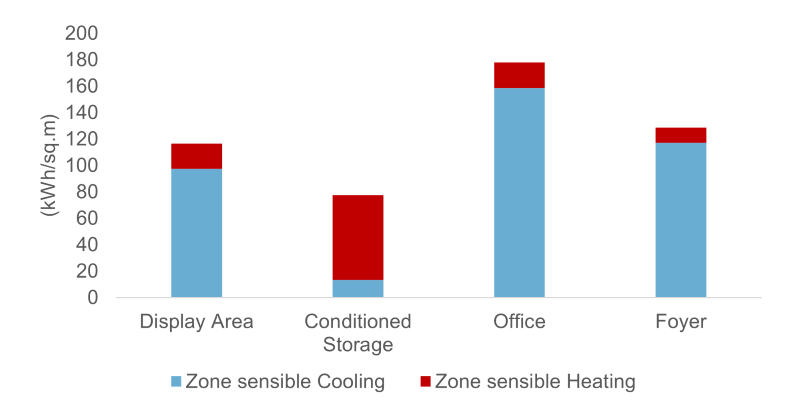
Figure 5: Base case Zone – Sensible Cooling / Heating
The thermal load distribution across zones indicates distinct system requirements based on their dominant conditioning needs.
- The Office zone shows the highest sensible cooling demand with moderate heating, making it a cooling-dominated perimeter zone with modulating loads, best suited for systems that operate efficiently across diverse load levels.
- The Conditioned Storage zone shows minimal cooling and a significantly higher heating share, indicating it is heating-dominated and requires a heating system capable of handling a uniform load effectively.
- The Display Area is primarily cooling-oriented with minor heating loads, necessitating an efficient system that doesn't overcool or undercool the space while controlling humidity. The Foyer is also predominantly cooling-driven with a smaller heating component. It also has modulating loads due to solar radiation, which must be addressed by a system that operates efficiently across a wide range of loading conditions.
System Optimization
Design Case Energy Modelling
The design case employs a HVAC system combining a water-cooled chiller coupled with a ground heat exchanger (GHX), a ground-source heat pump (GSHP) for heating, and a Variable Refrigerant Flow (VRF) system. The GHX specifications remain consistent with those in the base case model.
Centralised cooling is provided by two 50 kW centrifugal chillers with a COP of 5.4, operating in a sequenced configuration across two load ranges. The overall chiller capacity is intentionally undersized by 5% to maintain a part-load ratio close to 0.6 or higher, enhancing operational efficiency.
For heating, two systems are employed:
- VRF system (COP = 4.92) serving the foyer and office zones, and,
- ClimateMaster TMW340 heat pump with a rated heating capacity of 104 kW. Heating is managed at the zone level for enhanced control, with a supply air temperature of 50°C defined in the heating design settings. To provide greater operational flexibility, the setpoint managers for humidification and dehumidification are assigned a slightly wider control band than in the base case.
This configuration was modelled to achieve a balanced integration of efficiency, flexibility, and precise environmental control. The centralized system ensures high energy performance and stable operation while maintaining stringent humidity requirements, whereas the VRF system effectively addresses diverse and variable zone loads with a broader range of acceptable environmental parameters. Together, they form a resilient and adaptive system optimized for year-round comfort and reduced energy consumption.
Figure 6: Design Case | Combination System (VRF + VAV )
Performance of Base Case vs Design Case Model
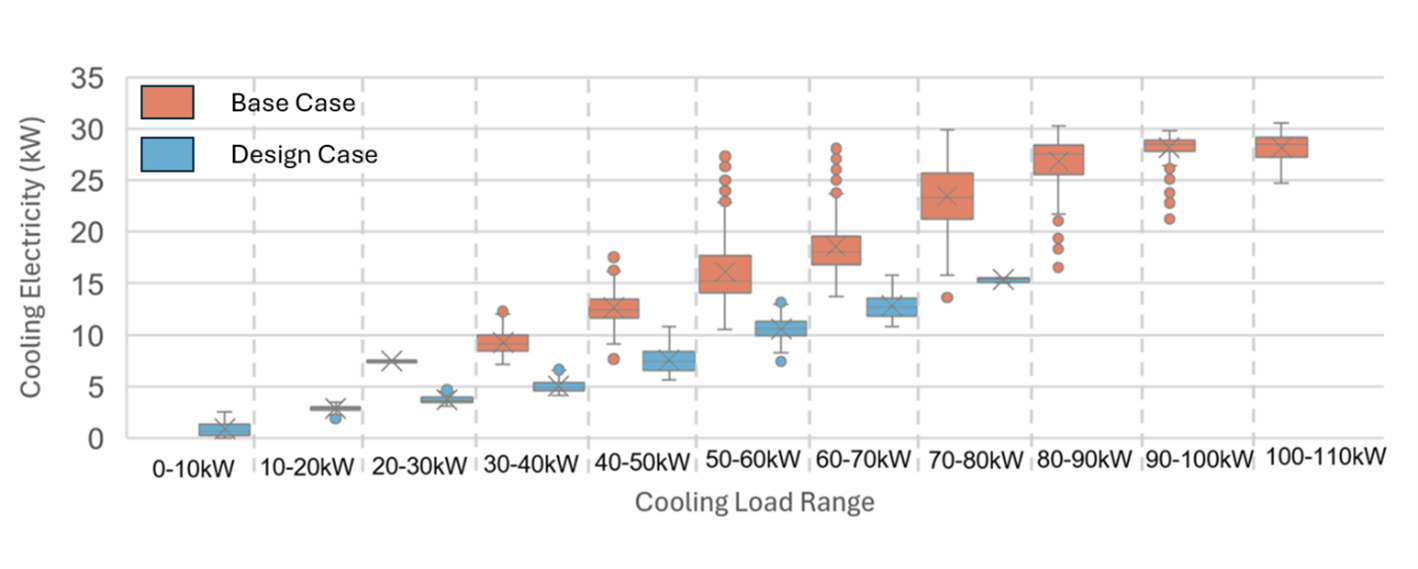
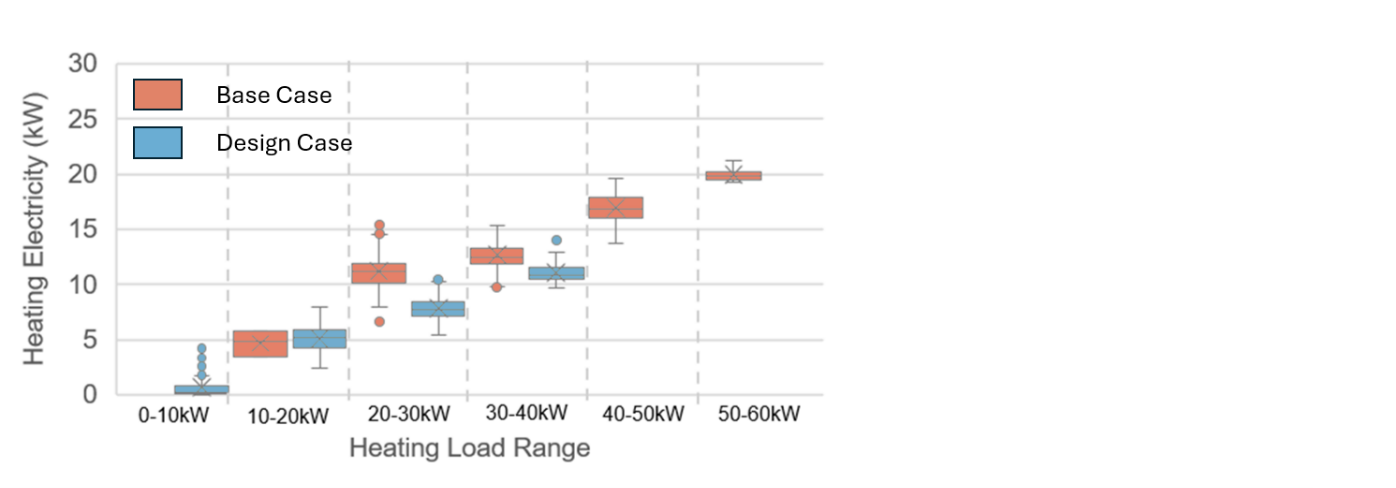
Figure 7: Thermal Loads vs Consumption for Base case vs Design Case – Cooling and Heating
The graphs in Figure 7 show that the design case uses less electricity for both cooling and heating across most load ranges compared to the base case. The narrower spread in the design case indicates more consistent and efficient performance, especially at medium to high loads, highlighting the improved energy efficiency of the hybrid system.
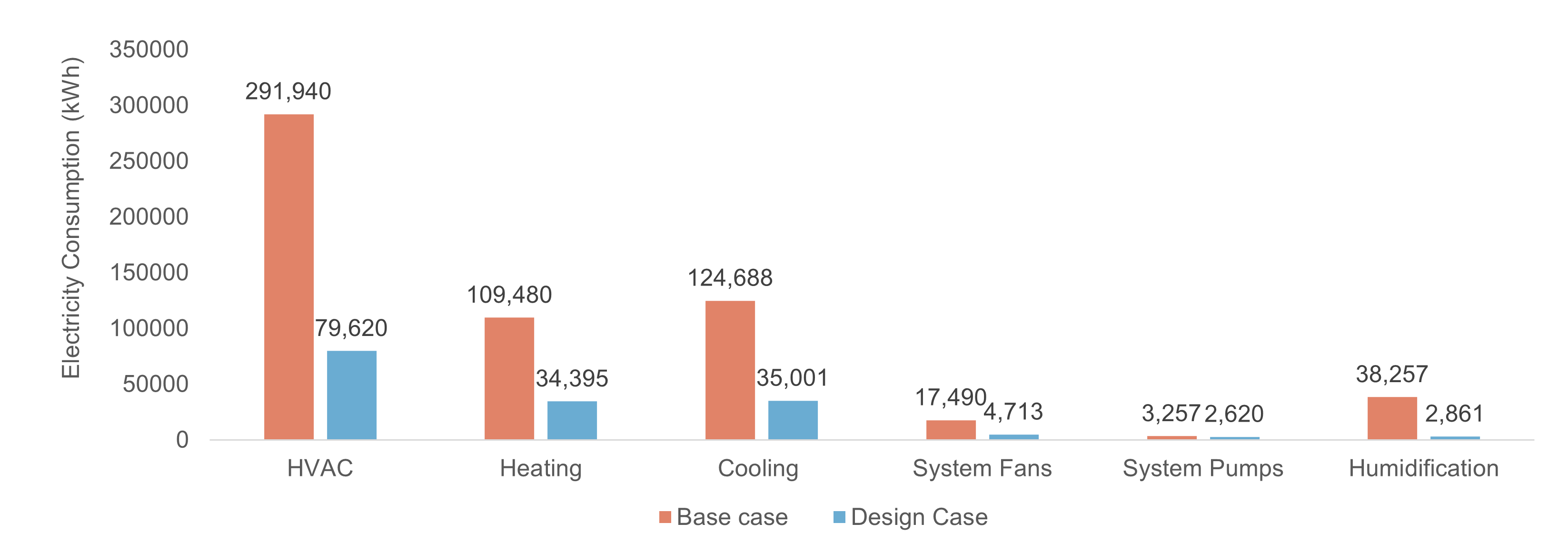
Figure 8: Electricity Consumption of HVAC system and its components for Base case and Design Case
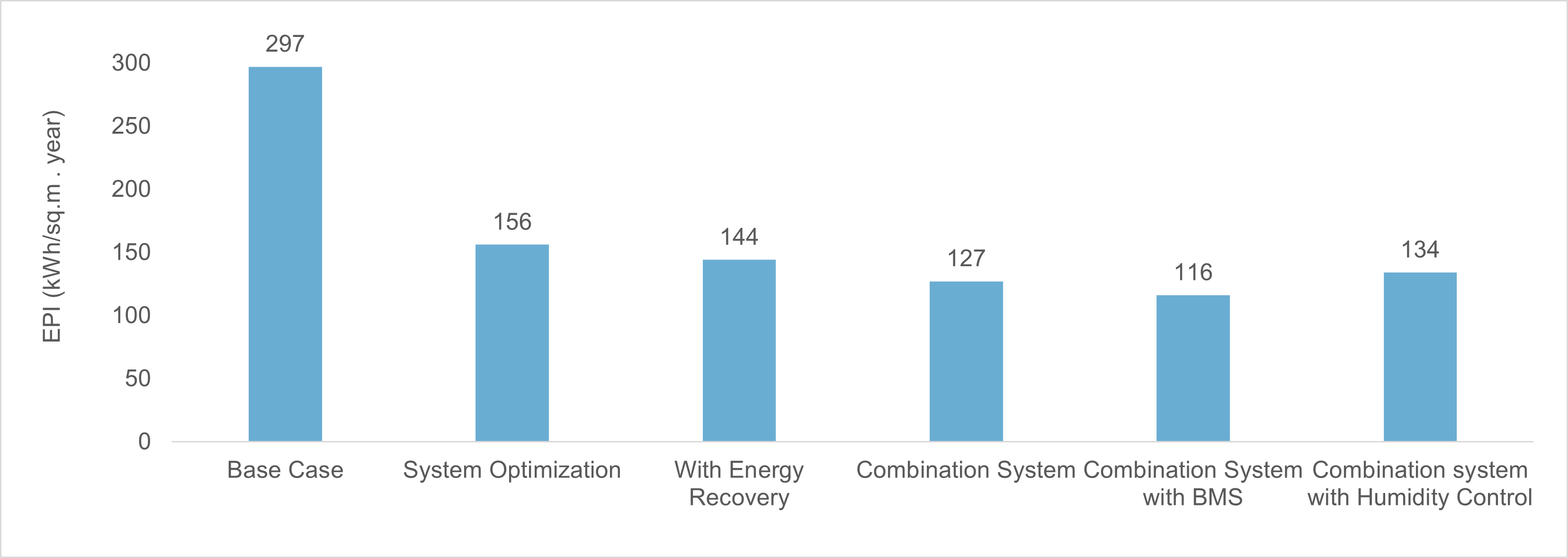
Figure 9: Energy Performance Index (EPI) reduction through various iterations
The graphs in Figures 8 and 9 highlight the significant improvement in energy performance achieved in the design case compared to the base case. Overall HVAC electricity consumption drops by nearly 72%, with substantial reductions in heating (68%) and cooling (72%) energy use, indicating the efficiency of the combination system (VRF + VAV) configuration. Other components such as fans, pumps, and humidification also show moderate energy savings. As a result, the Energy Performance Index (EPI) reduces significantly from 297 to 134 kWh/m²·year, reflecting the benefits of system optimization and smart control integration.
Unmet Hours
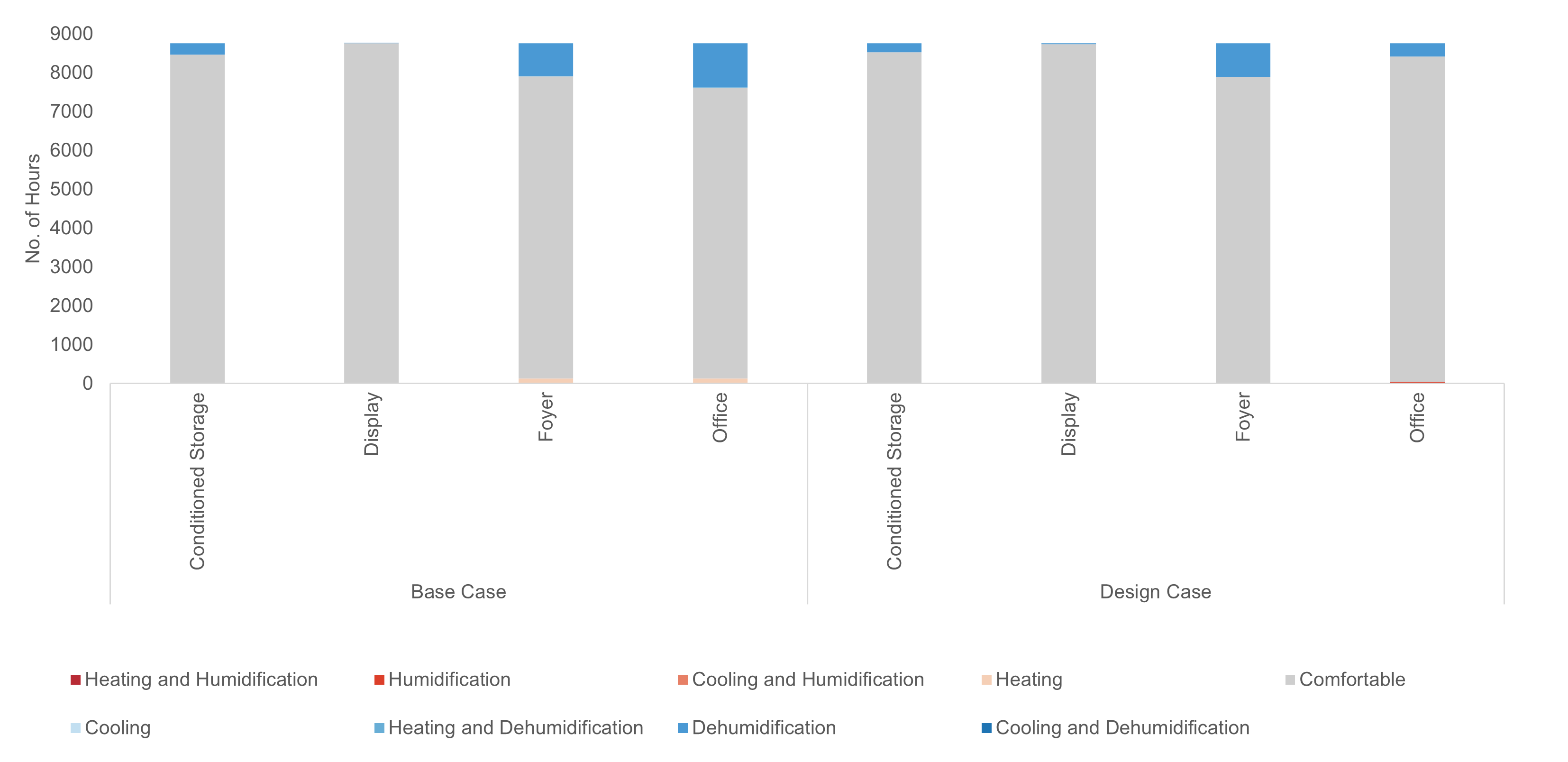
Figure 10: Unmet Hours Based on Zone Air Temperature and RH
Based on the defined temperature and humidity maintenance criteria (refer Figure 1), unmet hours are observed in certain zones. The conditioned storage space records 2.6% unmet hours, and the foyer exhibits 9% unmet hours, primarily during periods requiring dehumidification only. For the office zone, when evaluated over occupied hours, unmet hours remain within 2%, while the display area also shows less than 2% unmet hours over the 8,760 hours of the year.
OFF-GRID PROPOSAL: ART GALLERY
The proposed art gallery design case (optimized HVAC) has an annual electricity demand of 178,481 kWh, primarily from continuous environmental control, internal, and envelope loads.
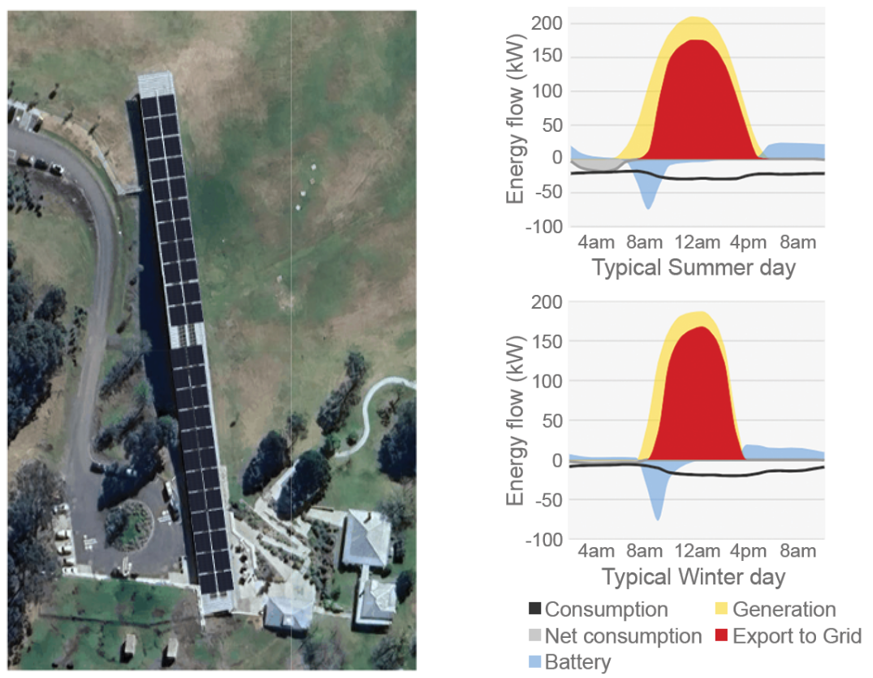
Figure 11 Fixed type Solar PV Panels mounted on Bridge Roof modelled with OpenSolar online platform (Left) | Energy flow with Battery (Right)
To achieve maximum energy autonomy, a 303.36 kW fixed solar PV system was proposed, designed at a 30° tilt and 352° azimuth to optimize annual generation. The system uses Mono-crystalline silicon (Mono-c-Si) panels with a module efficiency of 18.9%, chosen for their reliability and high performance. To enable storage and reduce grid dependence, the PV array is coupled with Mango Power batteries—each providing 20 kWh total energy capacity, 10.4 kW continuous discharge power, and 97% round-trip efficiency—supported by additional 15 kWh modules for extended backup flexibility.
During typical summer days, high solar generation allows the batteries to charge fully by mid-morning, with surplus energy either exported to the grid or reserved for evening use. In contrast, during winter, the reduced solar output shortens charging periods, prompting a steadier discharge pattern that sustains night-time loads. This operation pattern smooths daily demand fluctuations and ensures stable supply continuity across the seasons.
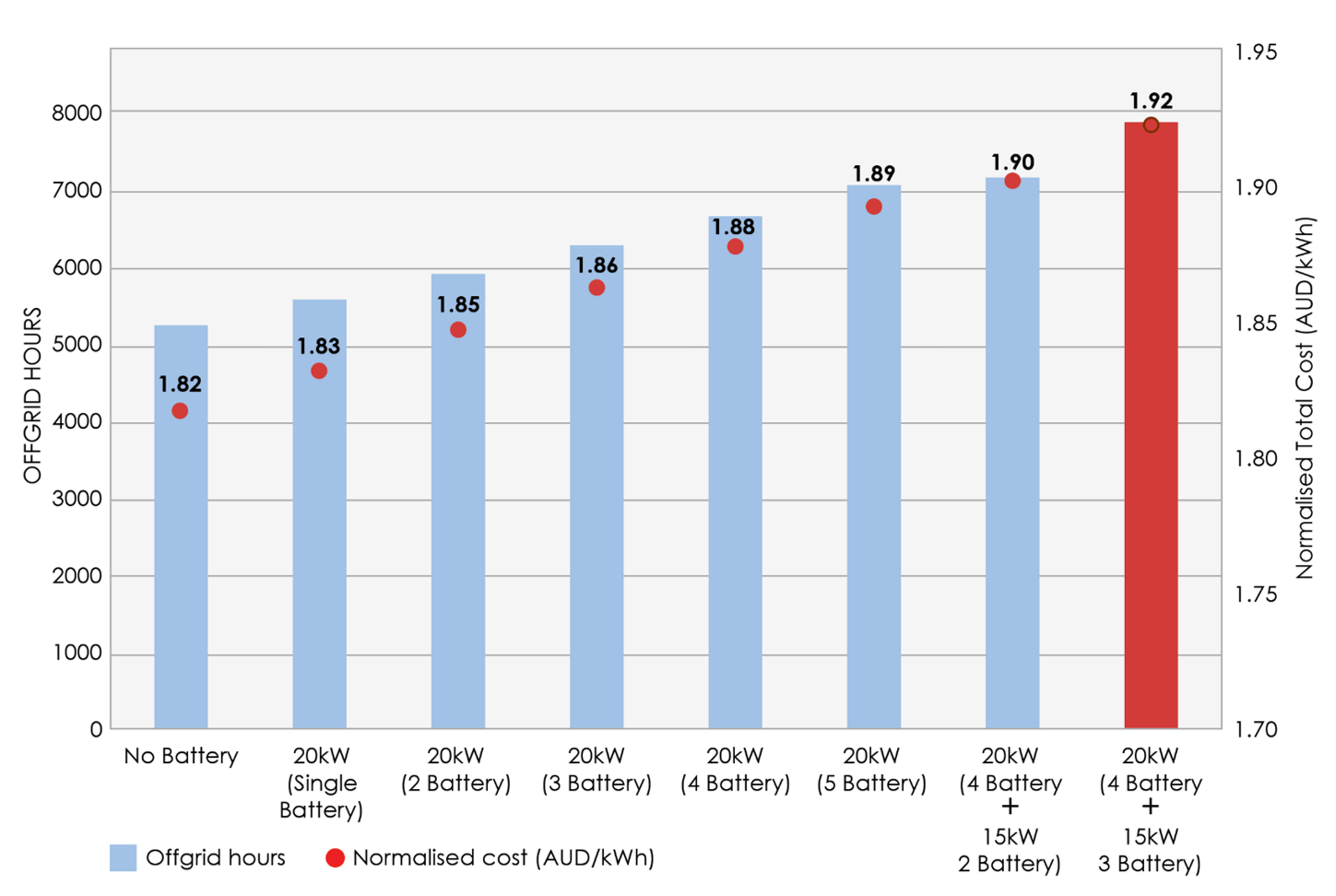
Figure 12: Annual Off-grid hours & normalized cost (AUD/kWh) with different Battery sizing options
Based on simulation outcomes, the optimized setup—comprising 4×20 kWh and 3×15 kWh batteries—achieves 7,868 off-grid hours per year, covering nearly 90% of annual operation with only limited reliance on the utility grid during extended cloudy periods. The PV array generates 483,261 kWh annually, almost three times the gallery’s demand, ensuring both self-sufficiency and resilience. The total system cost is estimated at 324,150 AUD, corresponding to a normalized cost of 1.92 AUD/kWh, successfully meeting the project’s energy independence and cost-optimization objectives.
Offset Achieved – Summary
The results indicate that an optimized active system significantly enhances the building’s performance while maintaining precise thermal and humidity control. Implementing energy conservation strategies such as heat recovery, optimized supply air temperatures, and hybrid system configurations — supported by Building Management System (BMS) controls — effectively reduces overall energy consumption.
Each component’s increased efficiency, along with robust operational control based on load profiles and spatial requirements, contributes to substantial savings and improved system reliability. The integration of the off-grid renewable energy system further offsets the building’s dependence on the utility grid, ensuring near-complete energy autonomy and resilience during outages.
Overall, the combined HVAC optimization and renewable integration achieve a 54% reduction in total annual energy use and enable ~90% off-grid operation, demonstrating a holistic approach to performance, sustainability, and operational continuity for existing buildings in sensitive environments like the Bundanon Art Gallery.
The first part of this study presents the Facade Optimisation for Thermal Comfort, for the Bundanon Bridge Accommodation.
 |
About the authorAkarshna A K, CEPT University With a background in architecture and certification as an IGBC Accredited Professional (AP), I am currently pursuing a Master’s in Building Energy Performance. My work focuses on building physics, HVAC optimisation, renewable integration, and climate-responsive design, using simulation tools to guide energy-efficient strategies. I am particularly interested in creating buildings that achieve both operational efficiency and thermal comfort. LinkedIn: http://www.linkedin.com/in/akarshna-ak |